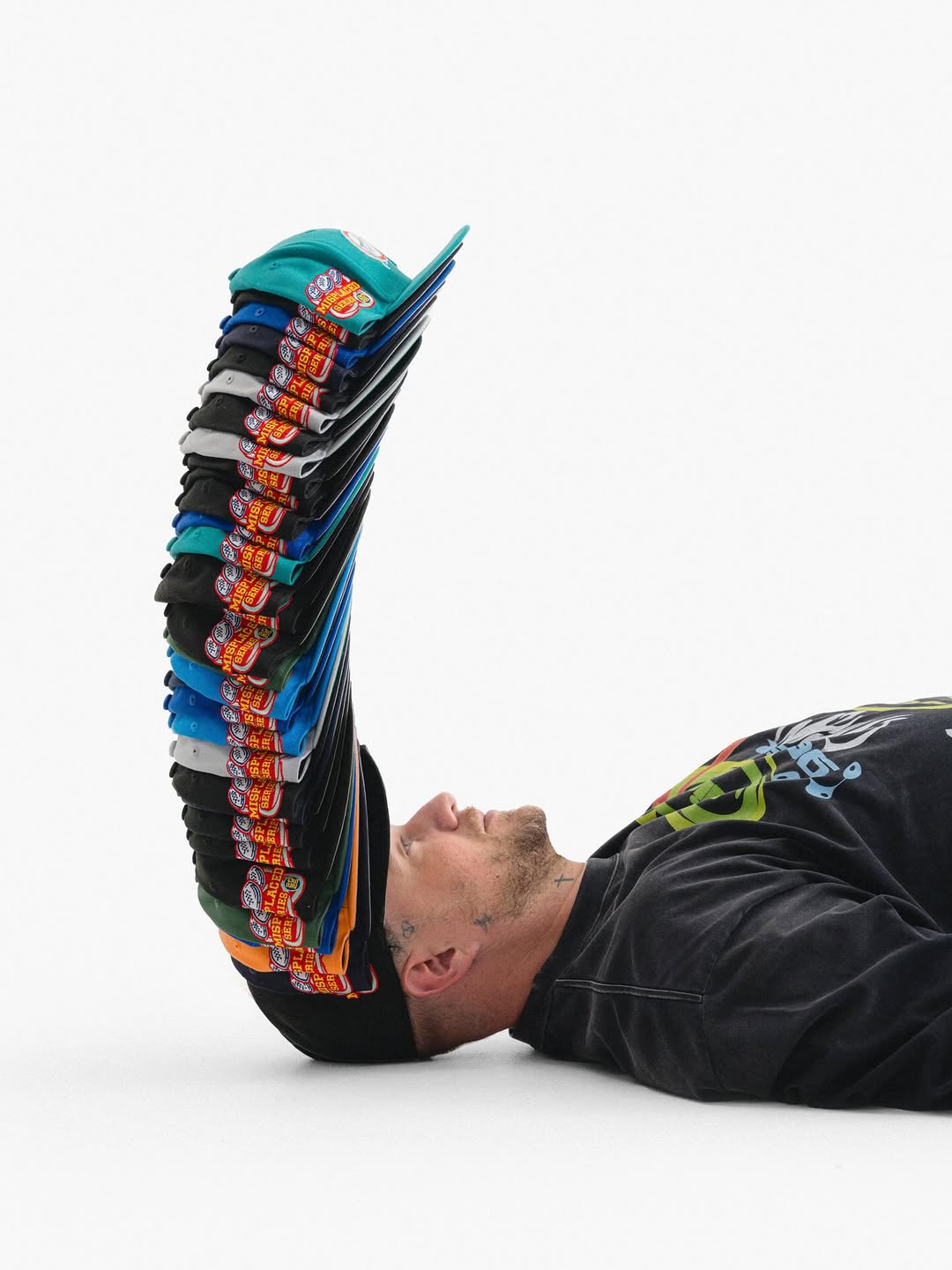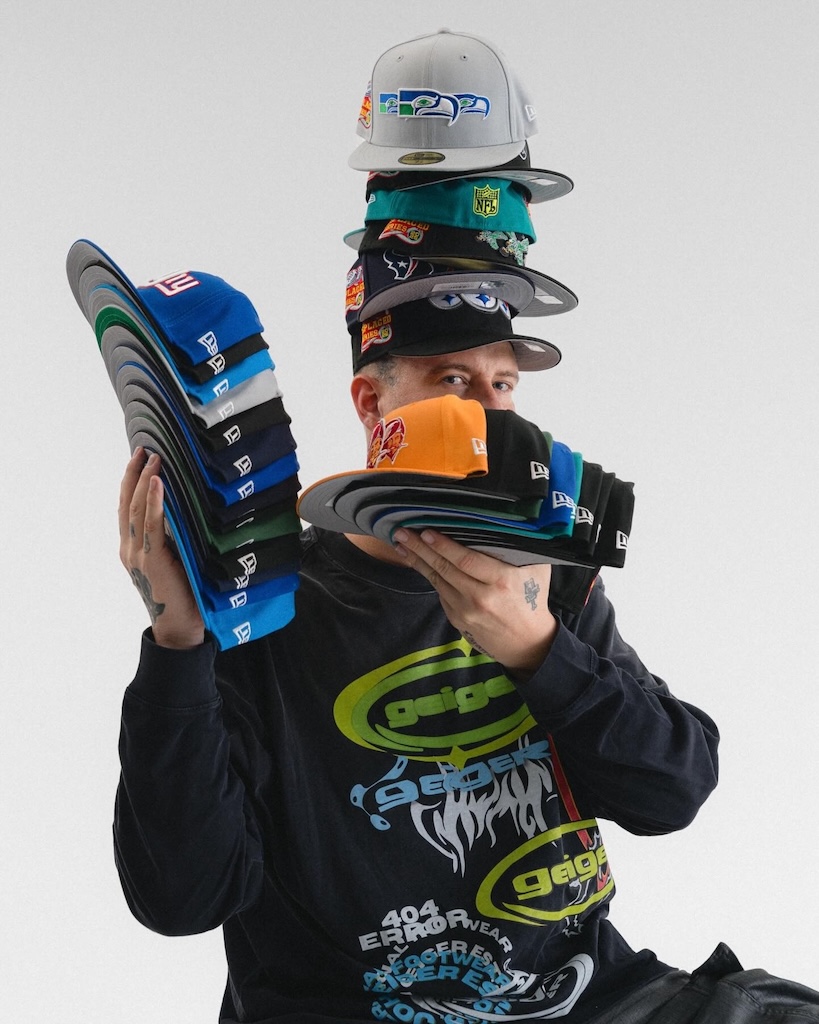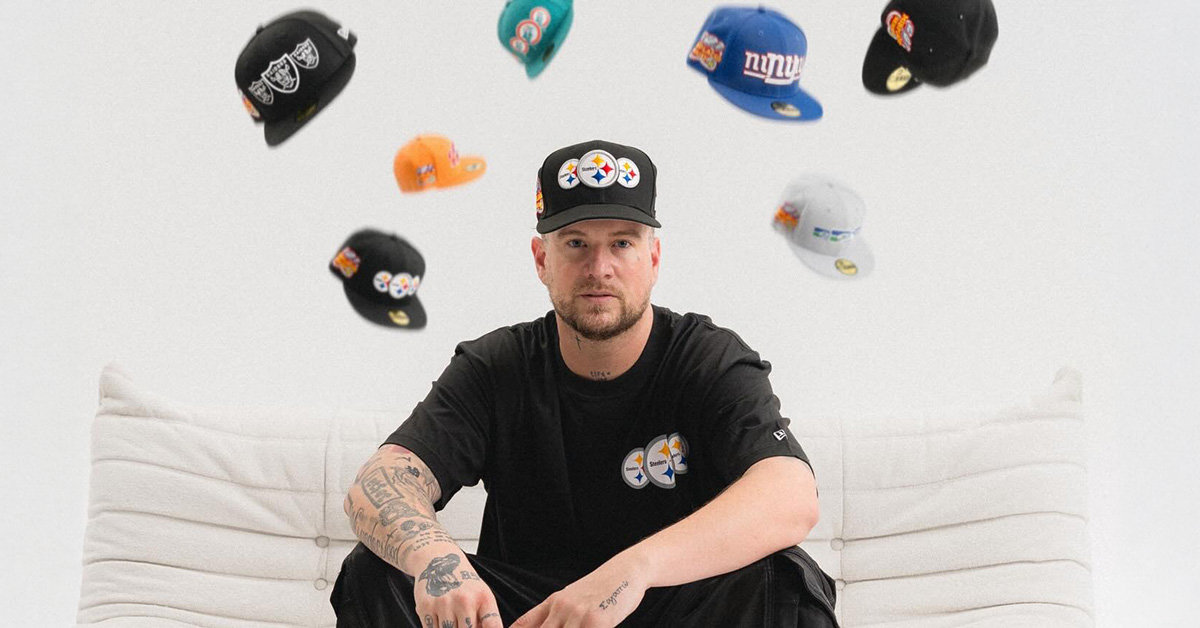
John Geiger is expanding his relationship with Lids through a new multi-year agreement that will continue to bring collections from his signature Misplaced Series in collaboration with WWE, Major League Baseball, the National Football League, and the National Basketball Association.
The designer’s next Lids release, MLB Misplaced Series 2.0, is slated to drop at Fanatics Fest this July, though the newly signed deal will keep the collaborations coming through 2028. Future drops include a WWE collection tied to WrestleMania 2027 in April, followed by an MLB release at Fanatics Fest 2027 in July, an NFL collection around the league’s season opener in September, and an NBA collection during All-Star Weekend in February 2028.
While the calendar includes four major releases tied to four different organizations, Geiger does not view them as disconnected projects. Each collection will be built around the same design language and creative perspective that he has spent more than a decade developing.
“By the time we get to the All-Star Game, I want people to look at the run and see a connected world, like every piece in the series is part of the same conversation,” says Geiger.
At the center of the partnership is the Misplaced Series, Geiger’s signature design concept built around layered logos, repositioned branding, and visual storytelling through familiar sports iconography.
The scale of the deal is notable. Lids is providing an independent designer with access to the visual identities and cultural reach of four of the largest properties in American sports and entertainment. That opportunity carries even greater significance when viewed alongside the path Geiger took to reach this point.
He did not emerge through the traditional structure of a major fashion house or spend his career working within a single product category. He has built his name across footwear, apparel, headwear, and accessories, often developing ideas independently when established brands were not prepared to move forward with them. Geiger’s ability to work across those different areas has become one of the defining qualities of his career.
This partnership shows what is possible when an independent designer continues refining an idea long enough for the industry to recognize its value. “I’ve been at this for over a decade, building a design language, refining a technique, taking ideas to brands who weren’t ready and then doing them myself,” Geiger says.
That history is essential to understanding the Misplaced Series. Geiger traces the idea back to 2014, when he presented Nike with a concept based around layering the Swoosh. Nike ultimately chose not to pursue the idea internally, but the company encouraged him to develop it independently. Instead of waiting for another brand to approve the concept, Geiger took that advice and began building the technique into his own work.
“They didn’t run with it themselves, but they encouraged me to take it on my own, and that turned into the best advice I could have gotten,” he says. “It pushed me to build the technique into my own work instead of waiting for someone else’s permission.”
Over the following decade, Geiger continued refining the concept, layering logos, repositioning familiar marks, and treating branding as a creative medium rather than something confined to a fixed placement. The approach eventually became the foundation of the Misplaced Series.
“The technique isn’t just about putting multiple logos on a hat,” he explains. “It’s about the crossover between sports and fashion that’s been building for years. Sports doesn’t live in sports anymore.”
Geiger believes team identities, city pride, player legacies, and league symbolism have all become part of modern fashion language, allowing the Misplaced Series to resonate with both sports fans and consumers who connect with the broader cultural story behind the products.
“The layered logos hold the full visual story—the city, the era, the team identity, the player history—all in one piece,” he says. “It works for sports fans because they recognize the references. It works for fashion because the references have become fashion language. The piece doesn’t need to pick a side because the sides aren’t separate anymore.”
That crossover appeal has helped previous Misplaced Series collections extend beyond traditional licensed sports merchandise. Earlier releases sold through at retail, generated significant media attention, and found success on the secondary market. Complex also recognized the project as one of the top streetwear collaborations of 2026.
“Honestly, it’s been the proof that the work is connecting,” says Geiger. “You can have a vision, but until people respond to it, until you see the resale market move, until you see a piece you designed on someone you don’t know in a city you don’t live in, you don’t really know if the work is landing.”
That response helped validate the long-term potential of the Misplaced Series concept and laid the foundation for a partnership of this scale.
“That’s what this Lids deal is,” Geiger says. “It’s not the start of something. It’s the next chapter of work that’s already been proving itself.”
Lids expressed a similar view of the expanded agreement.
“Lids is excited to expand our partnership with John Geiger, building on the momentum and success we’ve created together the past few years,” says Fred Haley, Senior Manager of Brand and Collaboration Strategy and Development at Lids. “This new agreement sets the stage for us to go bigger across all the major leagues and WWE. Can’t wait for people to see what we’ve got on the way. The best is still to come.”
For independent artists and brand owners, Geiger’s path should serve as meaningful inspiration. His progress demonstrates that an idea does not lose its value simply because a larger company initially decides not to move forward with it. Sometimes the most important response to rejection is not changing the idea, but continuing to develop it independently until its potential becomes undeniable.
“What we’ve built with Lids over the past few years was the proof of concept,” adds Geiger. “This deal is what comes next. Misplaced is my signature style—overlapping logos that tell a story on every piece—and now that signature lives across four of the biggest stages in American sports. Past team, present team, league mark, layered across WWE, MLB, NFL, and NBA. Same hand, four leagues, one franchise.”
There is no predetermined ceiling for what independent designers can build when they trust their ideas, understand their audience, and remain committed to the work. Geiger’s career offers evidence of what can happen when someone stops waiting for permission and begins creating the opportunities that were not initially available to them.
The hats will be the products people collect, wear, photograph, and discuss. The larger story is found in the years of development that made those products possible.
As Geiger puts it, “The hat is the artifact. The work behind it is the real thing.”